
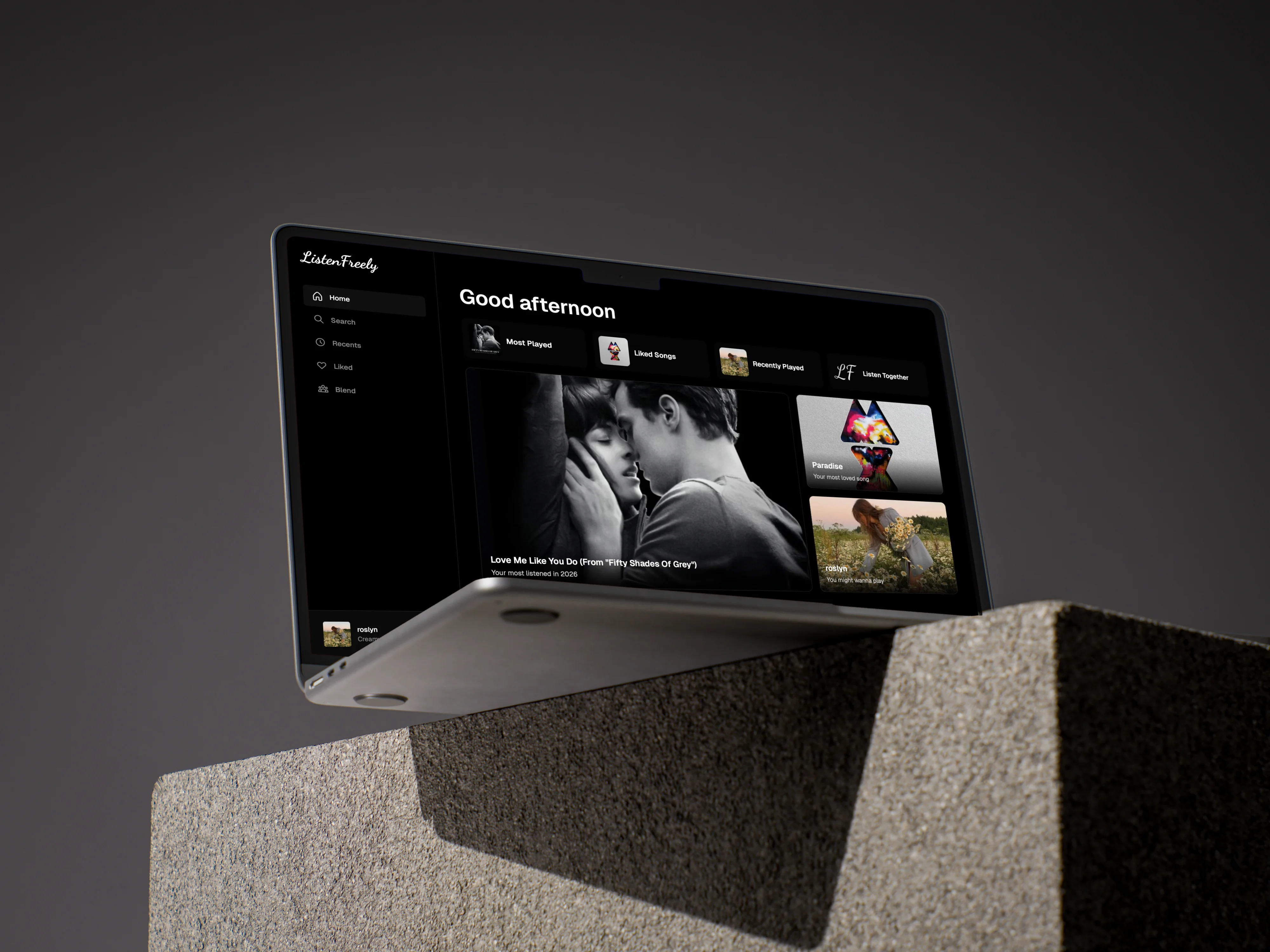
ListenFreely: Open Source Music Streaming
Built ListenFreely as a free, open-source music player where anyone can listen to music without subscriptions, ads, or sign-ups. Just open it, search for what you want, and play.
Why Another Music Player?
Music streaming services lock everything behind paywalls. Spotify requires premium for decent quality. YouTube Music has ads every few songs. Apple Music won't even let you try without paying.
Most "free" music players are sketchy. Filled with ads, require accounts, track everything you do, or are just fronts for piracy with terrible user experience.
I wanted something simple. Search for a song, play it, no bullshit. Open source so anyone can verify what it's doing. No data collection, no tracking, no monetization schemes.
How It Works
ListenFreely is a web-based music player. Built with standard web technologies – HTML, CSS, JavaScript. No frameworks, no build tools, just clean code.
The player uses public APIs to fetch music data and streams. No hosting audio files myself, no copyright infringement. Just connecting to legal sources that provide free music streaming.
Search functionality finds tracks based on your query. Results show with artwork, artist name, track title. Click to play, music starts streaming. Simple and direct.
Player Features
Standard music player controls. Play, pause, skip forward, skip back. Volume control. Progress bar for seeking through the track.
Queue management lets you line up multiple songs. Add tracks to the queue, reorder them, remove what you don't want. Build your own playlist on the fly.
Now playing display shows current track with artwork. Artist and title prominently displayed. Visual feedback for what's currently streaming.
Open Source Philosophy
The entire codebase is on GitHub. Anyone can read it, audit it, modify it. Complete transparency about what the player does and doesn't do.
No tracking code. No analytics. No third-party scripts collecting data. Your listening habits stay yours.
Self-Hosting
Because it's just HTML, CSS, and JavaScript, hosting is trivial. Throw it on any static hosting – Netlify, Vercel, GitHub Pages, your own server.
No backend server required. No database to maintain. Just serve the files and it works. Makes deployment and maintenance simple.
Technical Stack
Vanilla JavaScript for all functionality. No React bloat, no Vue overhead, no framework complexity. Just modern JavaScript doing what it's good at.
HTML5 Audio API handles playback. Native browser APIs for media control. No external player dependencies.
CSS for styling with clean, minimal design. Focus on usability and clarity. Music player doesn't need fancy animations, it needs to work well.
API Integration
Integration with public music APIs for fetching track data and stream URLs. APIs that provide free, legal access to music content.
Asynchronous requests with fetch API. Load track information, artwork, and streaming URLs dynamically. Keep the interface responsive while data loads.
Error handling for failed requests. If a track won't load, show appropriate message. If API is down, gracefully degrade functionality.
User Experience
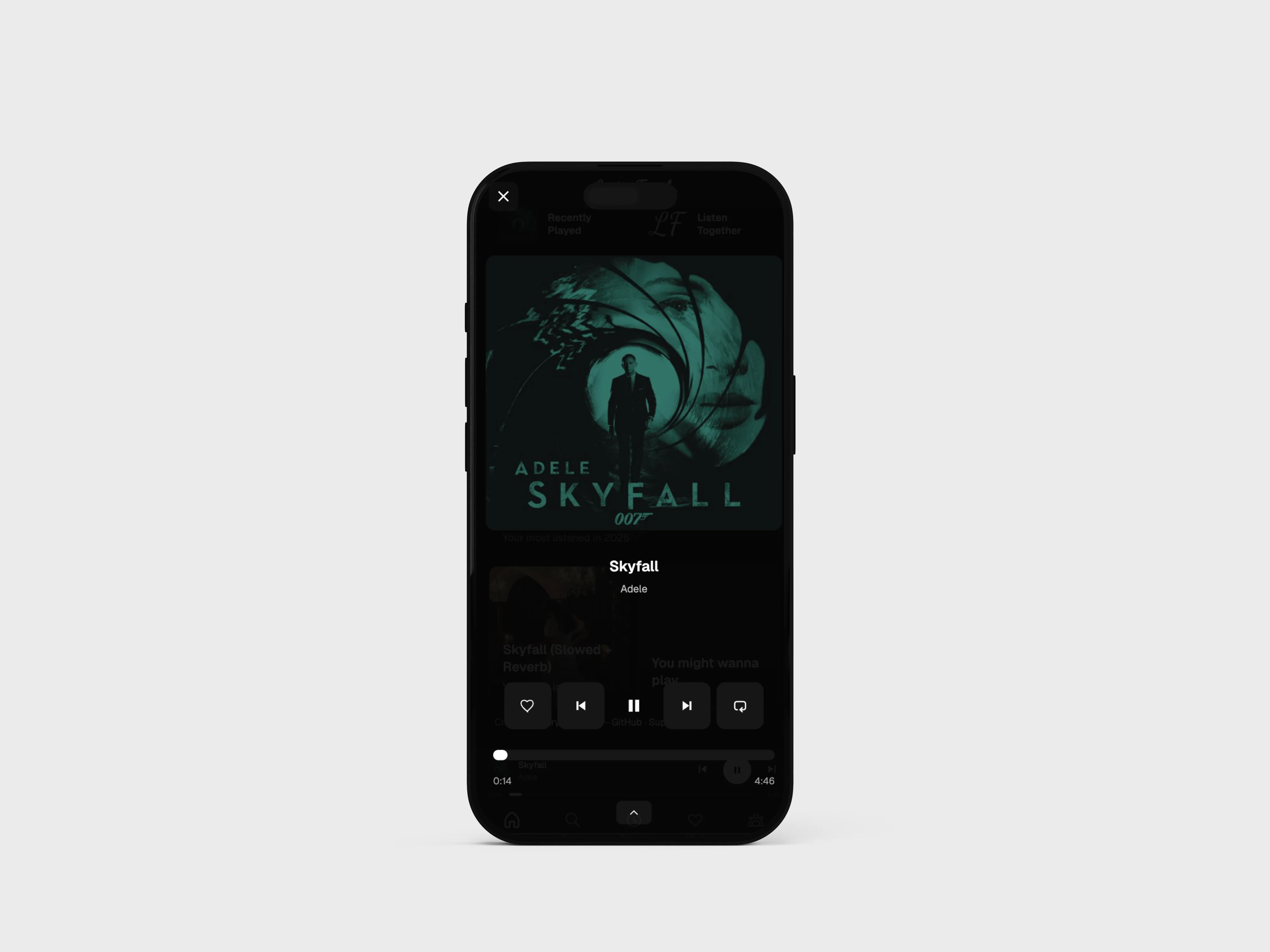 Clean interface without distractions. Search bar at the top. Results below. Player controls at the bottom. Everything where you expect it.
Responsive design works on desktop and mobile. Same functionality across devices. Adjust layout to fit screen size without losing features.
Keyboard shortcuts for common actions. Spacebar for play/pause. Arrow keys for seeking. Standard patterns people already know.
No Sign-Up Required
The biggest feature is what's missing – no account creation. No email address, no password, no profile. Just use it.
This means no personalization, no saved playlists, no recommendations based on listening history. Trade-off for privacy and simplicity.
If you want to save playlists, export them as JSON. Import them later. Local storage instead of cloud accounts.
Performance
Lightweight application with minimal dependencies. Fast page load, instant search results (API permitting), quick track playback start.
Lazy loading for images. Don't load album artwork until it's needed. Keeps initial page load fast.
Efficient event handling. Debounced search input to avoid excessive API calls. Throttled progress bar updates to reduce repaints.
Current Limitations
Depends on third-party APIs. If they go down or change their terms, the player breaks. That's the nature of using free services.
Limited music catalog compared to paid services. Free APIs don't have every track that Spotify has. But they have enough for casual listening.
No offline mode. Streaming only, requires internet connection. Can't download tracks for later (that would be piracy in most cases).
Audio quality depends on the source. Whatever quality the API provides is what you get. Usually decent but not audiophile-grade.
What I Learned
Working with audio APIs taught me about media streaming, buffering, codec support, browser compatibility issues.
Vanilla JavaScript is powerful enough for complex applications. Frameworks aren't necessary when you understand the fundamentals.
API reliability matters. When you depend on external services, you inherit their uptime problems and rate limits.
Copyright and licensing is complicated. Building a music player requires careful attention to where content comes from and what's legal to stream.
Future Improvements
Better offline support using service workers and caching. Cache previously played tracks for quick replay without re-fetching.
Playlist export and import with better formats. Maybe M3U support for compatibility with other players.
Equalizer controls for audio customization. Browser Web Audio API makes this possible.
Social features without accounts. Share playlists via URL encoding. No backend needed, just long URLs with track data.
Why It Matters
Music should be accessible. Not everyone can afford Spotify Premium. Not everyone wants to deal with ads or sign-ups.
Open source music players provide alternatives. Transparency about what the software does. Freedom to modify and improve.
ListenFreely proves you can build usable music streaming without complex backend infrastructure or monetization schemes.
It's not competing with Spotify or Apple Music. It's an alternative for people who want simple, free, open music playback.
Check it out on GitHub at github.com/aryansrao/listenfreely. Clone it, host it, use it. Free as in freedom and free as in beer.